
Tie rods
Steel Collar Ties for Vaulted Ceilings
Steel collar ties, also called rafter ties or vaulted ceiling tie rods, run across a vaulted ceiling from one side to the other, a slim black steel line across the room. They end on the rafters or pitched ceilings: a 2-point rafter tie with an optional turnbuckle, or up to 5 points from a center plate. We make every system in Texas, built to your measurements and priced online.
Vaulted ceiling systems from $152. A typical one, a 12 ft rafter tie at 8/12, 3/4" with a turnbuckle, on two three-hole brackets: $456.

01 2 points
The 2-point steel rafter tie
One steel rod runs level from a bracket on one rafter to a bracket on the other. An optional turnbuckle at the center gives 6" of take-up, so you can tighten the rod after it's installed. It's the simplest steel collar tie we make, and the one most customers choose.
- Brackets: Made for your roof's pitch, from 4/12 to 18/12. A face-mount bracket bolts to the face of a rafter or a finished ceiling; a one-hole or three-hole beam bracket saddles the rafter.
- Rod: 1/2", 3/4", or 1" steel, pinned to each bracket with a clevis.
- Turnbuckle: Optional. Without one, the rod is one fixed length, with a little adjustment on its clevis threads.
- Span: Each rod runs up to 20 feet; with a turnbuckle joining two rods, up to 40 feet between the brackets.
It works rafter to rafter, across a finished gable ceiling, or from an exposed rafter on one side to a finished ceiling on the other.
02 3 to 5 points
Metal collar ties with 3, 4, or 5 points
For a wider room or a bolder look, the level rods from each side meet at a steel center plate, and more rods run up from it. The center plate comes small or large, with or without a hole in its center.

3 points
Level rods from each side meet at a center plate, with a vertical rod up to the ridge.

4 points
Level rods with two diagonal rods up to the rafters, all meeting at a center plate.

5 points
Level rods with a vertical rod to the ridge and two diagonal rods to the rafters, all meeting at a center plate.


03 Brackets
Collar tie brackets
- At the rafters: Pitched brackets made for your roof: face-mount, one-hole beam, or three-hole beam, for rafters 1 1/2" to 15" wide and 3" to 15" deep.
- For diagonal rods: Square (4" × 4") or rectangular (1 1/2" × 6") brackets on the rafters.
- At the ridge: A face-mount bracket on a flat ridge beam or ceiling, or the rod passes up through the ridge beam to an ogee washer and nut.
- Your own brackets: Tell the designer the distance to their pins.
Fasteners aren't included. Tell the designer the diameter of your bolts or screws, from 3/16" to 1", and we make the rafter brackets' holes 1/16" larger.
04 Steel
Steel, finish, and shipping
Our standard tie rods are carbon steel: ASTM A108 1018 cold-finished rod, C-1035 steel clevises and turnbuckles, and brackets of A36 steel plate. Every part ships unfinished or in our matte black powder coat; add powder coating in the cart. Every part, brackets included, is also available in 316 stainless steel by quote, in mill finish (not polished or brushed). Shipping is free in the lower 48 states, except rods over 7 feet, which pay a long-item rate.
05 Engineering
Collar ties, rafter ties, and your engineer
In building terms, a collar tie runs high, in the upper part of the roof, and a rafter tie runs low, near the tops of the walls. They do different jobs, and whether your roof needs either is up to your plans or your engineer.
Our steel collar ties are architectural hardware. They aren't engineered or load-rated. Use them where your engineer or your plans call for a tie, or as a design feature under a structural ridge beam. Removing or raising an existing collar tie or rafter tie, or vaulting the ceiling of an existing house, needs an engineer first. Give your engineer our specifications.
06 Photos
Installed
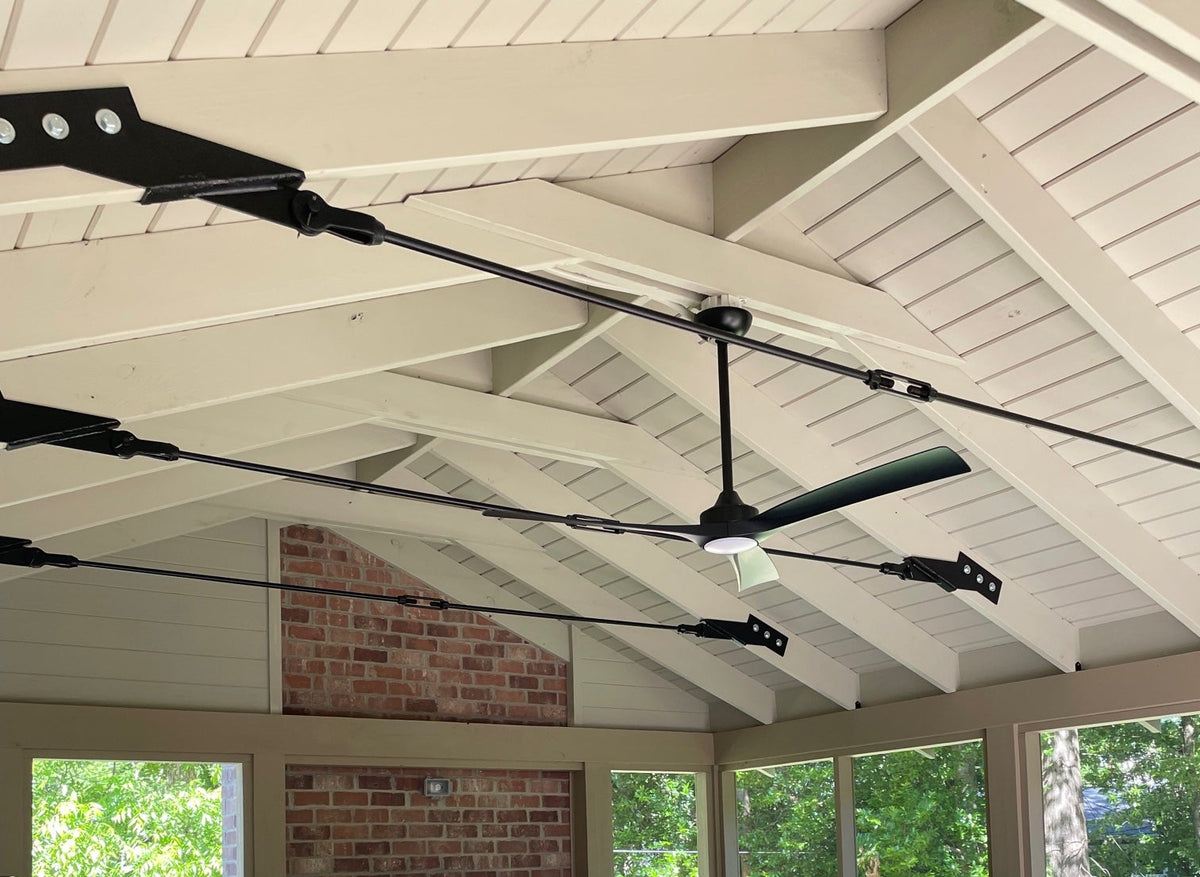
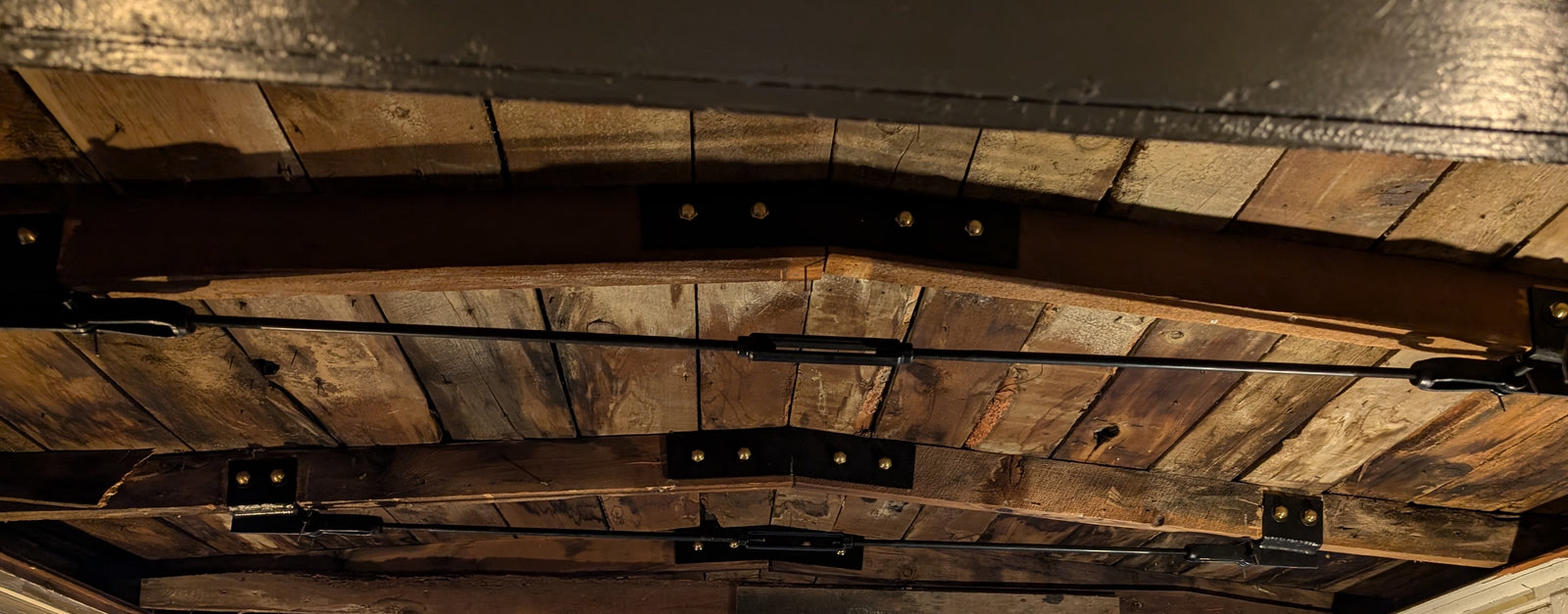
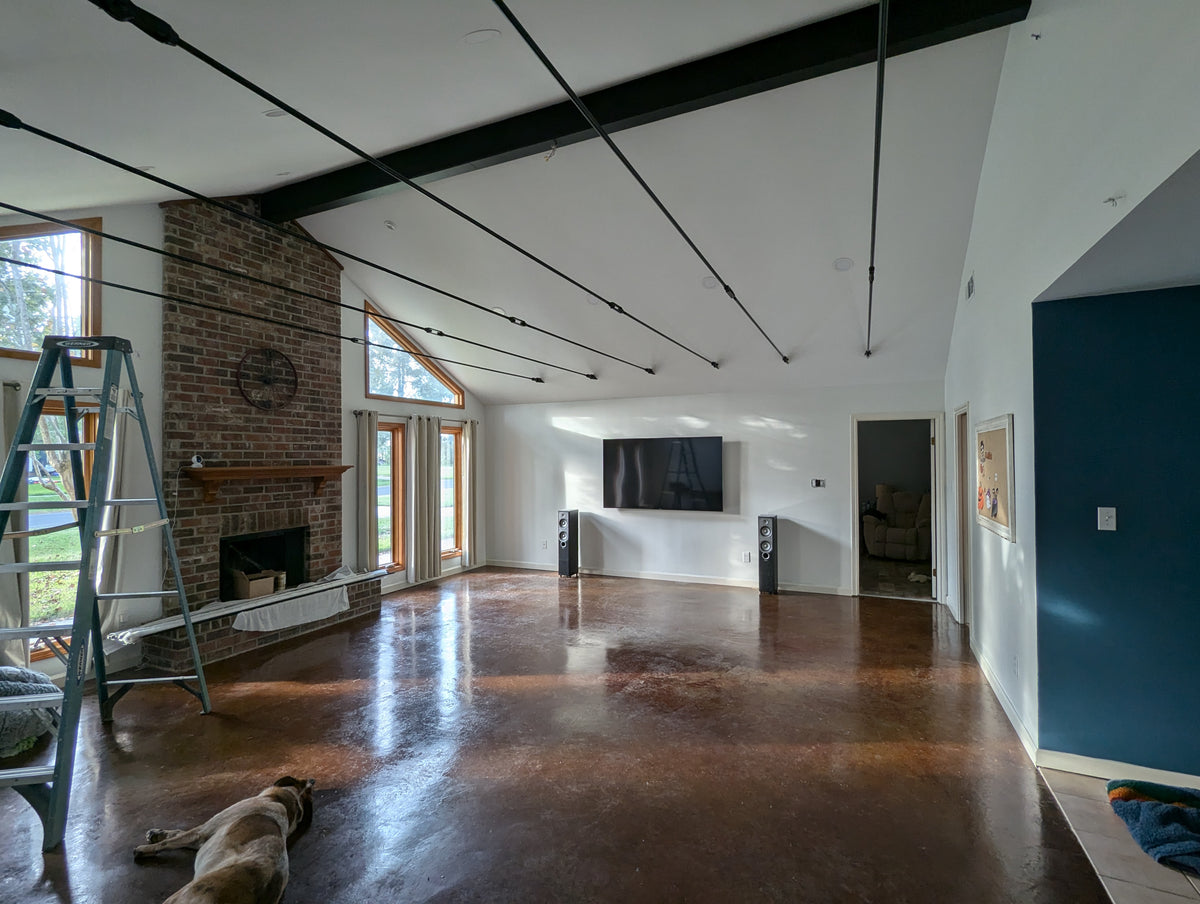
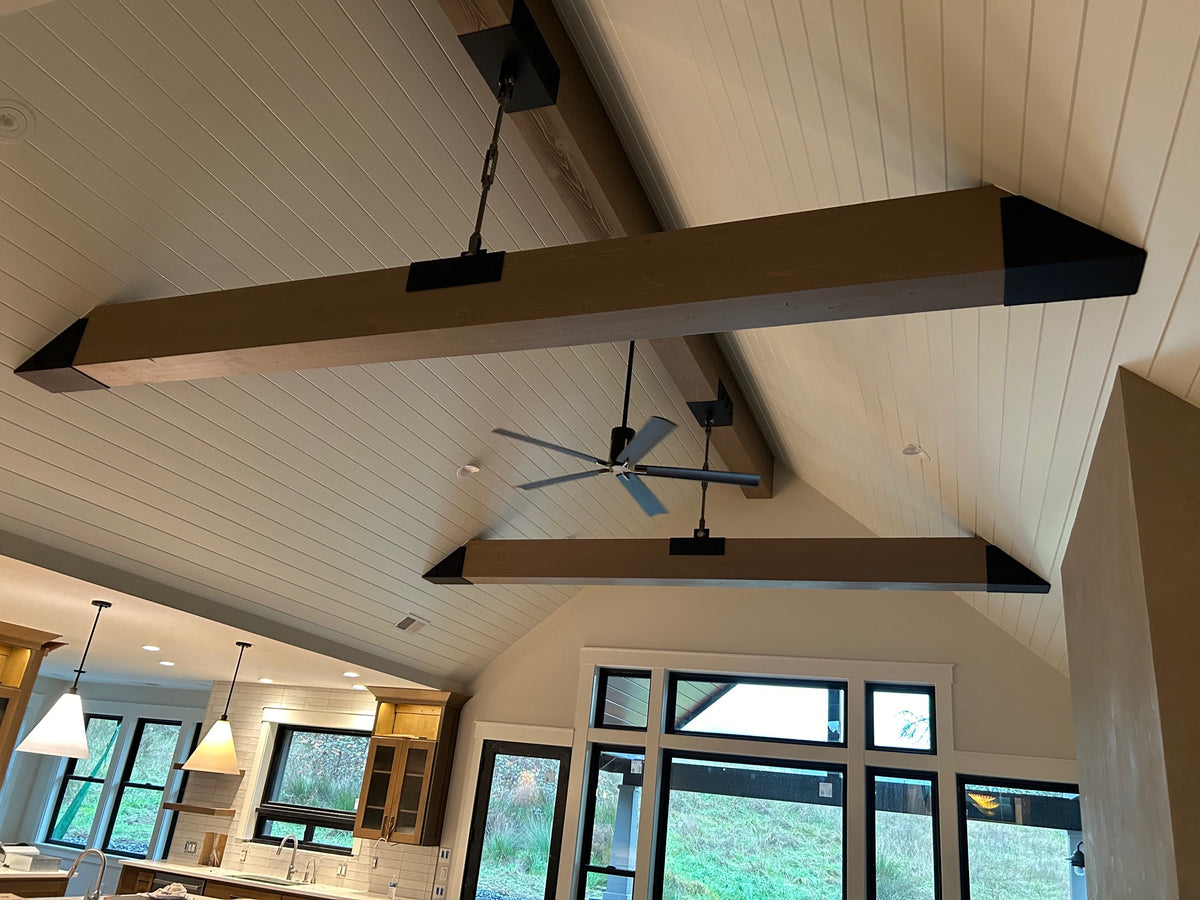
07 Questions
Questions about steel collar ties
Can I take out my wood collar ties and use steel ones?
Not without an engineer. Removing or raising an existing tie changes how the roof carries its load. Ask an engineer before you take any tie out, and have them decide whether a steel tie suits the job.
How high should the tie sit?
Wherever your plans or your engineer put it. In the designer, you enter the roof's pitch and the distance between the two brackets, and we make the brackets for that pitch.
What rod diameter do I need?
If the tie carries load, that's your engineer's call. For looks, the designer prices 1/2", 3/4", and 1" rods side by side, and we make custom assemblies up to 2" in diameter.
What does a steel collar tie cost?
The designer shows the price as you enter your measurements, for all three rod diameters, before anything goes in your cart. Powder coating is added in the cart. Custom work is priced by the pounds of steel and inches of weld.
Do you install?
No. We make and ship the parts; your builder or installer fits them.
Tie rod systems are architectural hardware and are not engineered or load-rated for a particular structure. Have a qualified engineer confirm that a system suits your building before relying on it to carry load.
More tie rods: all our architectural tie rods and tension rods, awning and canopy tie rods, tie rods for walls and columns, and the tie rod, turnbuckle, and clevis specifications.